Generative engine optimization in Egypt SEO

Let’s be honest for a second. The internet in Egypt has become a bit of a crowded souq lately. Everyone is shouting, everyone is selling, and everyone is convinced they have the loudest voice. You have twenty competitors all bidding on the same keyword, all stuffing their pages with the same jargon, all praying for a miracle from the algorithm gods.

It used to be a fair fight. You’d optimize your keywords, build a few links, maybe say a little prayer, and Google would hand you a spot on the first page. It was a simple transaction. You give them content; they give you traffic.

But that deal? It’s gone. It expired while we were all busy looking at our analytics dashboards.

Welcome to 2026. The game isn’t SEO anymore. It’s GEO: Generative Engine Optimization. And if you’re still playing by the old rules, you’re not just losing—you’re invisible.

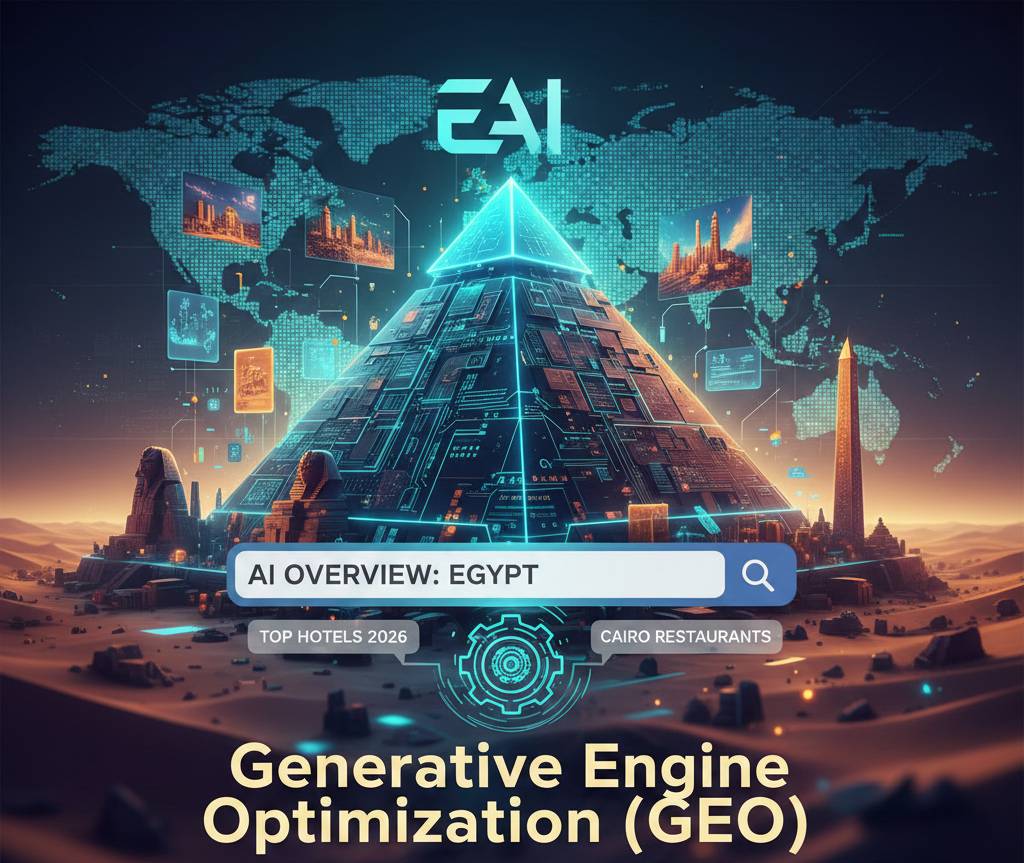
The Big Squeeze

Here is the situation. A user in Maadi pulls out their phone and types, "Best digital marketing agency for real estate."

In the old days—about twenty minutes ago—Google would give them ten blue links. The user would click three, compare them, and make a choice. You had a fighting chance.

Now? The search engine doesn't want to send them to your website. It wants to answer the question right there. It reads the whole internet, digests it, and spits out a summary. A neat, tidy paragraph that tells the user exactly who to trust.

If your agency isn't mentioned in that summary, you are the guy at the party who didn't get an invite but showed up anyway. You’re standing in the corner with a warm drink, and nobody is looking at you.

Speak Like You Live Here

For years, we had a language problem. We wrote for robots. We used stiff, formal "Modern Standard Arabic" that sounded like a government press release because we thought that’s what the machine wanted.

But the machine got smart. Terrifyingly smart.

The AI models powering search today—Gemini, ChatGPT, and the rest of the gang—have finally figured out the Egyptian dialect. They know the difference between a textbook definition and how people actually talk in a cafe in Dokki. They know that when an Egyptian user types "Al-da7i7", they aren't looking for a stiff corporate bio; they’re looking for someone who knows their stuff.

If you want to rank in Egypt today, you have to stop writing for a professor in London and start writing for your customer in Cairo. Use the words they use. If your content sounds like it was written by a committee, the AI will treat it like junk mail—it’ll file it away and forget it ever saw it. Be human. Be specific.

Trust is the Only Currency

The AI isn’t just looking for keywords anymore. It’s looking for a reason to believe you. In our line of work, we call this E-E-A-T (Experience, Expertise, Authoritativeness, and Trustworthiness). It’s a terrible acronym, but it’s the law of the land.

In the Egyptian market, trust is harder to earn than a parking spot in downtown. The AI knows this. It is constantly asking: "Who is this guy? Does he actually exist?"

How do you convince a robot you’re legit?

  • Show your face: Anonymous articles are dead. Put a name on it.

  • Cite your sources: If you make a claim about "market trends," back it up with data.

  • Get local: If the local news, a chamber of commerce, or a respected industry blog mentions you, the AI notices. It thinks, "Okay, this person exists in the real world."

The "Egypt Infrastructure" Tax

Let’s talk about the network. We all know the struggle. One minute you’re streaming in 4K, the next you’re watching a loading circle spin like a hubcap.

The AI knows this, too. It knows if users bounce off your site because it takes ten seconds to load on a 4G connection in Alexandria. In Egypt, optimizing for mobile speed isn't a "best practice"—it’s a survival tactic.

If your site is bloated with heavy images and fancy animations that choke a mid-range Android phone, you’ve lost. The AI won’t recommend a site that frustrates the user. It’s bad for business.

The Strategy

You can’t just write one article and go home. You need a foundation. You can’t build a penthouse if the basement is full of water.

Before you start worrying about "Generative Optimization" and AI robots, you need to make sure your house is in order. You need to understand the fundamental landscape of the local market.

If you don't have the basics down yet, stop reading this and go read The Ultimate Guide to SEO in Egypt. It’s the roadmap. Once you understand the terrain, come back here, and we’ll talk about how to fly over it.

The Closing Argument

Look, the internet isn't a library anymore; it’s a conversation. If you want to be part of that conversation in Egypt, you have to stop trying to "game" the system. You can’t trick the machine anymore. It reads faster than you, it knows more than you, and it doesn't sleep.

So what’s left?

The truth. The best answer. The fastest experience.

Don't be boring. Don't be invisible. And for heaven's sake, don't be slow. The robots are watching, but it’s the people who are buying.

Author

  • Abd al-Rahman Khalifa

    I'm a passionate digital marketer experienced in PPC, media buying, and SEO. Currently, I'm thriving as an SEO specialist at Fantastic Services.

    My background experience in the B2B sales field has played a pivotal role in my career shift to digital marketing. It's like a frontend developer becoming a backend developer. Peter Drucker once said, The aim of marketing is to make selling superfluous. I would expand on his quote by saying, Ideally, marketing should act as a goal assist, and sales should act as the finisher in soccer.